Map the symptom first
Record the exact gear, speed, temperature, throttle, load, selector position, sound, feel, and recent work that reproduce the concern before fluid, adjustments, calibration, or parts are changed.
 IRONWAKECUSTOMS(202) 600-6906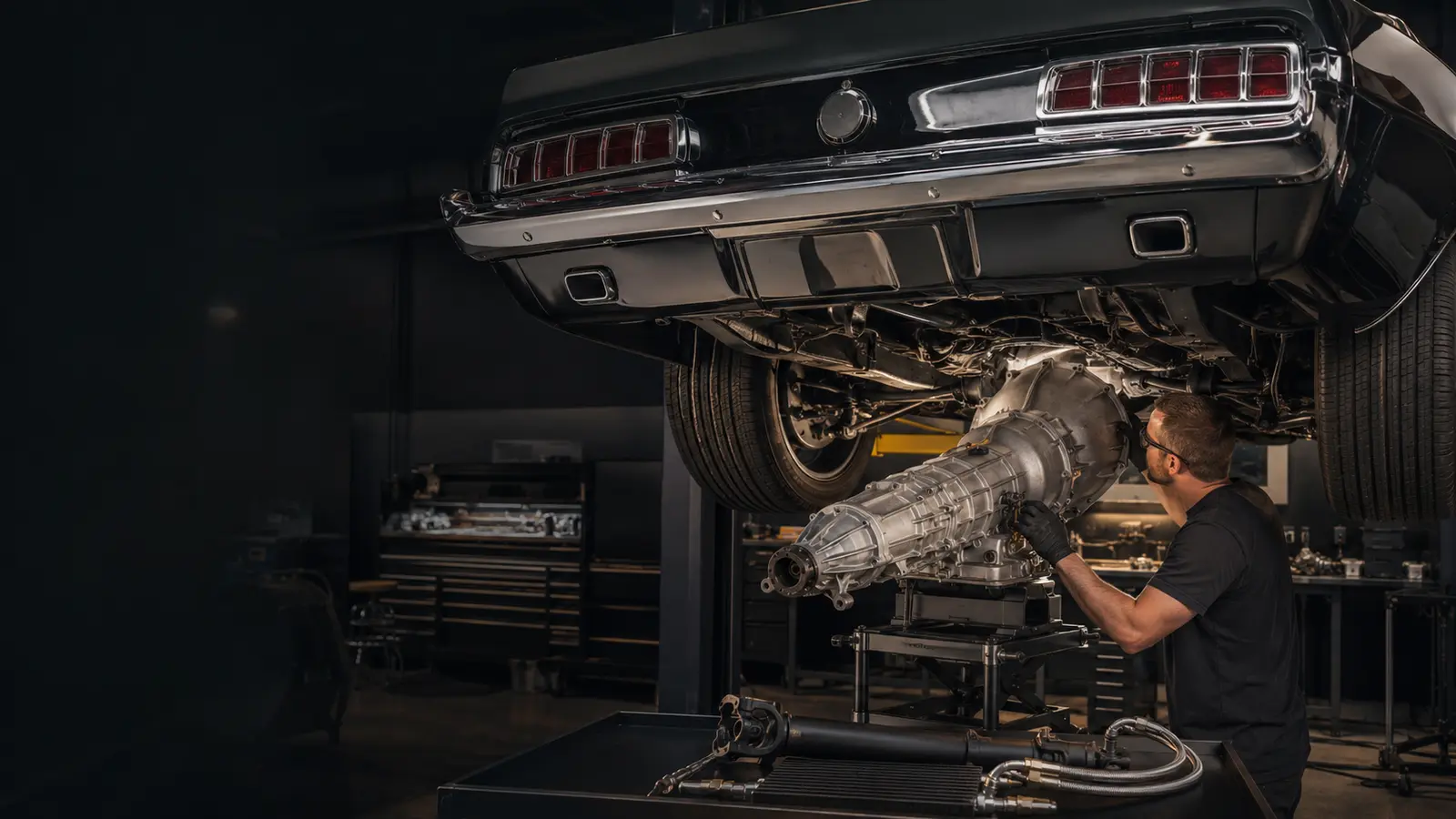
Classic-car transmission diagnosis · Fredericksburg region
Separate the gearbox fault from every installation problem that can feel like one.
The search that brought you here
For owners searching for classic car transmission repair, vintage automatic or manual transmission diagnosis, hard-shift help, slipping-transmission inspection, leak diagnosis, or a shop that understands modified drivetrains near Fredericksburg, Stafford, Spotsylvania, and King George.
Delayed engagement, slipping, flare, grinding, hard shifting, jumping out of gear, vibration, leaks, heat, or a shifter that no longer agrees with the transmission can involve fluid and pressure, clutch or converter behavior, linkage, controls, mounts, bellhousing alignment, driveline geometry, cooling, wiring, gearing, or internal wear. Classic cars add swapped components, discontinued parts, decades of repairs, and undocumented fabrication to the diagnosis. Ironwake evaluates the transmission in the installed vehicle, defines the evidence, and separates supported repair and integration work from any internal rebuilding or specialist work the findings require. A vehicle that loses drive, slips badly, grinds, overheats, leaks heavily, moves in the wrong range, or has a severe new vibration should not be driven for more testing; arrange safe transport for inspection.
Tell us about the vehicle, truck, or boat →Record the exact gear, speed, temperature, throttle, load, selector position, sound, feel, and recent work that reproduce the concern before fluid, adjustments, calibration, or parts are changed.
Verify transmission identity, clutch or converter, bellhousing, linkage, controls, mount, crossmember, driveshaft, cooling, wiring, exhaust clearance, and vehicle geometry before condemning the case.
Separate external repair, installation correction, supported service, conversion planning, and any internal transmission or converter work that may require a qualified specialist.
What the project may include
Project fit depends on the vehicle, installed transmission, engine, controls, prior modifications, documented specifications, symptoms, condition, parts and service-information support, required tooling, intended use, and inspection findings. Evaluation does not imply that every transmission can be rebuilt in-house or that a replacement unit is automatically the answer.
A deliberate service sequence
The useful sequence moves from a repeatable symptom to component identity, installation evidence, controlled testing, and a written scope. The exact tests vary by transmission, but the order keeps a classic from receiving an adjustment or replacement that cannot solve the real fault.
Start with more than ‘it shifts badly.’ Record whether the problem is delayed engagement, a flare between gears, engine speed rising without road speed, harsh application, grinding, refusal to enter a gear, popping out of gear, converter-clutch cycling, shifter mismatch, leak, odor, whine, clunk, vibration, or heat. Note the selected range, actual gear, vehicle speed, engine rpm, throttle, load, incline, fluid and ambient temperature, cold-versus-hot behavior, and whether the concern appears under acceleration, steady cruise, coast, braking, or reverse. Document when it began and any recent engine, transmission, clutch, converter, axle, tire, wiring, calibration, mount, crossmember, exhaust, or ride-height work. Do not keep driving through active slip, grinding, loss of drive, severe vibration, overheating, a major leak, or unintended movement just to collect another example.
Classic vehicles often contain a transmission from a different model year, a later valve body or tailhousing, an aftermarket case, a used swap unit, or controls assembled from several kits. Record the case, tag, casting, pan, connector, tailhousing, bellhousing, shifter, clutch or converter, cooler, controller, harness, speed sensor, axle ratio, tire size, and relevant part numbers instead of relying on the seller's description. Confirm the engine, crank or flexplate arrangement, pilot support, input and output details, mount position, fluid specification, linkage or cable geometry, and any builder documentation. Manufacturer service literature should match the exact unit and configuration. A correct diagnosis cannot begin from an assumed transmission family, fluid, ratio, pressure specification, or electronic pinout.
Follow the identified transmission's procedure for checking fluid level and temperature; procedures differ, and an incorrect method can produce a false low or high reading. Note color, odor, visible debris, aeration, contamination, and evidence of mixed or unsupported fluid without treating appearance alone as an internal diagnosis. Trace leaks from the highest wet point and distinguish engine oil, transmission fluid, gear oil, coolant, and hydraulic-clutch fluid. Inspect cooler lines, hoses, fittings, pan, seals, vent, speedometer connection, wiring, linkage, cable, vacuum source where used, clutch hydraulics or mechanical linkage, mount, crossmember, fasteners, tunnel, floor, exhaust, and heat shielding. A collapsed mount, misadjusted selector, restricted cooler, grounded wiring, bent linkage, or exhaust contact can imitate or worsen gearbox trouble.
For a manual transmission, determine whether poor engagement comes from clutch drag, insufficient release travel, pilot-bearing trouble, bellhousing misalignment, shifter or rail adjustment, incorrect fluid, worn synchronizers, gear or bearing damage, or an installation conflict. If the car shifts with the engine off but grinds while running, the clutch release system deserves measurement before the gearbox is blamed. For an automatic, compare selector position, throttle or load input, kickdown or throttle-valve geometry, vacuum where applicable, speed and range signals, brake input, solenoid commands, pressure behavior when an approved test exists, converter operation, and actual ratio. Scan data and calibration can help on supported electronic combinations, but software cannot repair low fluid, a restricted cooler, burned friction material, leaking seals, failed hydraulics, damaged hard parts, or an incorrectly installed transmission.
Transmission problems can be caused or accelerated by the structure around the case. Inspect bellhousing fit, dowels, engine and transmission mounts, crossmember height and stiffness, case-to-tunnel clearance, shifter opening, exhaust contact, output-yoke engagement, slip travel, driveshaft runout and balance evidence, universal joints, operating angles, pinion relationship, axle location, and ride height. TREMEC notes that bellhousing misalignment, driveline angles, crossmember or mount issues, clutch actuation, and incorrect fluid can create hard shifting, vibration, wear, or failure; Dana Spicer provides angle and critical-speed tools for evaluating the driveline rather than guessing. Measurements must reflect the vehicle at its applicable loaded ride height and the exact single-Cardan, double-Cardan, multi-piece, or independent-rear layout—not a universal pinion-angle number copied from another build.
Group findings into immediate safety or damage concerns, external adjustments or repairs, installation corrections, supported service, optional improvements, and internal transmission or converter work. The scope may include linkage or clutch correction, cooler and line work, leak repair where supported, mounts or crossmember fabrication, wiring or input repair, driveshaft correction, documented fluid service, or coordination with a transmission specialist. Some internal problems require removal, teardown, measuring, machining, replacement parts, converter service, or builder-specific setup that should not be promised before inspection. A used or customer-supplied transmission can be evaluated, but identity, storage history, condition, ratios, input and output, control system, documentation, compatibility, and parts support must be confirmed. Conversion is a separate decision, not the default answer to a repairable installation fault.
Approved work should follow the exact service instructions for fluid, seal and fastener installation, clutch clearance and travel, linkage or cable adjustment, cooler flow, wiring, mount loading, bellhousing alignment, driveline angles, torque, break-in, and adaptation or relearn where supported. Static checks come first: secure mounts and crossmember, correct range and neutral-safety behavior, reverse lights, no leaks, no cooler or exhaust contact, proper clutch release, smooth shifter travel, safe driveshaft clearance, and correct fluid level by the specified procedure. Validation begins at low speed and light load before full-temperature operation, highway speed, or heavier load is considered. Recheck fluid, leaks, fasteners, temperature, scan data where applicable, shift quality, clutch or converter behavior, vibration, and new codes. Record the installed parts, measurements, fluid, adjustments, and any remaining specialist recommendations for future service.
Local, appointment-based project work
Ironwake Customs evaluates transmission and driveline concerns for classic cars, classic trucks, restomods, and appropriate swapped vehicles from Fredericksburg, Stafford, Spotsylvania, King George, Dahlgren, Colonial Beach, the Northern Neck, and genuinely nearby Southern Maryland by appointment. For an initial project review, send the year, make, and model; engine and transmission identification; manual or automatic controls; exact symptoms and when they occur; fluid type and history; recent work; axle ratio and tire size; controller, clutch, converter, shifter, bellhousing, mount, crossmember, and driveshaft details; clear photos; codes or logs when supported; and parts already purchased. A physical inspection and measurements may still be required before the repair path, outside specialist needs, parts, or estimate can be established.
Check project fit ↗Useful planning references
These public, manufacturer, and industry resources add useful context for identification, system support, safety, and compliance. The exact vehicle and approved project scope still control the repair plan.
Manufacturer guidance connects fluid specification, clutch actuation, bellhousing alignment, driveline angles, crossmember and mount condition, and installation quality with shifting, vibration, wear, and transmission life.
Open source ↗TREMECThe manufacturer library provides model-specific service manuals, parts information, and instructions, reinforcing the need to identify the exact gearbox before inspection, fluid service, adjustment, or teardown.
Open source ↗Dana SpicerDana's driveline tools add useful measurement context when transmission position, driveshaft geometry, universal-joint angles, or shaft speed may be contributing to vibration or component wear.
Open source ↗Questions owners ask before starting
Heat-related slip can involve fluid level or type, aeration, a restricted or undersized cooler circuit, pressure loss, seal leakage, converter behavior, worn friction material, or another internal fault. Stop repeated testing, document the temperature and conditions, and identify the transmission before changing fluid, pressure, or calibration.
Clutch drag is a common possibility. Measure pedal and release travel, clearance, linkage or hydraulics, pilot support, bellhousing alignment, clutch installation, and the specified fluid before assuming the synchronizers alone are responsible. Continuing to force shifts can add gearbox damage.
Yes. A collapsed, loose, incorrectly loaded, or poorly positioned mount can change powertrain position, driveline angles, shifter or linkage geometry, exhaust clearance, and case movement. Mounts, crossmember, engine mounts, driveshaft, and surrounding structure should be inspected together.
Not by itself. Fluid appearance and odor are evidence, but diagnosis also depends on level, correct specification, debris, pressure or scan data where applicable, operating symptoms, cooling, leaks, service history, and internal findings. Avoid a blind flush or additive before the unit and condition are identified.
It can help diagnose and correct supported configuration or calibration issues after the transmission, fluid, wiring, inputs, speed signals, converter, gearing, tire size, cooling, hydraulics, and mechanical condition are verified. Calibration cannot repair slipping clutches, failed seals, damaged hard parts, low pressure, or an installation fault.
No blanket in-house rebuilding claim is made. Ironwake can evaluate the installed classic-car system, perform supported repair and integration work, and identify when removal, internal rebuilding, converter service, machining, or other documented specialist work belongs in the project plan.
Send the vehicle, engine, transmission identification, automatic or manual controls, symptoms by gear and temperature, when the problem began, fluid and service history, leaks, noises, codes or scan logs, axle ratio, tire size, recent work, part or kit numbers, builder paperwork, photos of the installation and underside, and parts already purchased. Inspection may still be necessary before pricing.
The project needs a real starting point
Ironwake will review the vehicle, current condition, intended use, and requested scope before recommending the right next step.
Start the conversation ↗