Follow the motion
Watch input move from the steering wheel through the column, shaft, gear, linkage, suspension, hubs, wheels, and tires to locate play, flex, binding, or interference.
 IRONWAKECUSTOMS(202) 600-6906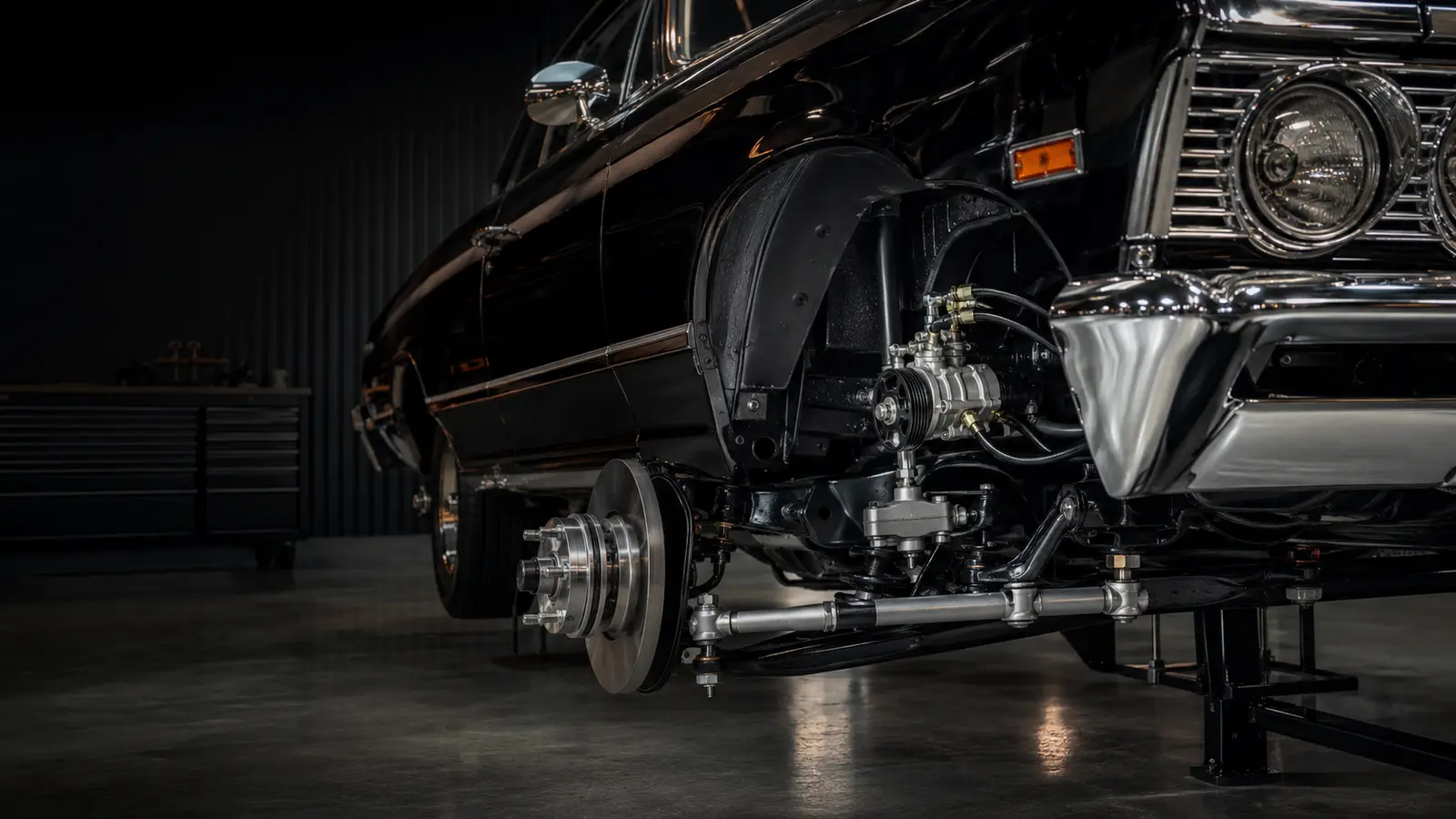
Classic-car steering diagnosis · Fredericksburg region
Trace every inch of lost motion before the next part gets blamed.
The search that brought you here
For owners searching for classic car steering repair, vintage steering-box diagnosis, steering-linkage service, power-steering leak help, or answers to wander, excessive play, binding, poor return-to-center, and unpredictable road feel near Fredericksburg, Stafford, Spotsylvania, and King George.
A classic that wanders, pulls, binds, leaks, shimmies, or needs constant correction may have more than one contributing fault. Tires, wheel bearings, ball joints or kingpins, linkage, steering gear, column, shaft joints, hydraulic assist, suspension geometry, alignment, frame condition, and decades of prior modifications all influence what reaches the road wheels. Ironwake evaluates those connections as a system before defining a repair. If steering changes suddenly, catches, has visible joint or mount movement, loses assist, or no longer responds predictably, stop driving and arrange safe transport for inspection.
Tell us about the vehicle, truck, or boat →Watch input move from the steering wheel through the column, shaft, gear, linkage, suspension, hubs, wheels, and tires to locate play, flex, binding, or interference.
Identify worn or damaged parts before using alignment settings to mask looseness, an off-center gear, altered ride height, or bump-steer geometry.
Coordinate steering findings with tires, brakes, suspension, engine and exhaust clearance, structural condition, and the car's intended use.
What the project may include
Project fit depends on the vehicle, steering architecture, suspension, structural condition, installed components, prior modifications, parts support, and inspection findings. A review may include the following connected areas without assuming that every vehicle needs every item or that every steering gear can be rebuilt in-house.
A deliberate service sequence
The useful sequence moves from an exact symptom to mechanical evidence, measurements, an approved scope, and controlled validation. The route changes with the car, but skipping the early stages usually creates more guesswork later.
Record whether the car wanders, drifts steadily, follows road grooves, shimmies, pulls while braking, binds in one direction, will not return toward center, leaks, makes noise, loses assist, or allows steering-wheel motion before the road wheels respond. Note speed, road crown, bumps, braking, throttle, temperature, load, and when the problem began. Include recent tire, wheel, brake, suspension, engine, header, steering, or alignment work. Do not keep road-testing a car with sudden steering change, a catching shaft, visible mount movement, loose fasteners, damaged tires, severe wheel-bearing play, active fluid loss, or unpredictable control simply to gather more evidence.
Classic vehicles may retain a factory manual box, use a later power box, have a rack-and-pinion conversion, or contain an undocumented mixture of columns, shafts, joints, pitman arms, center links, spindles, and suspension parts. Verify the year, model, frame, front suspension, gear or rack, linkage, column, assist system, wheels, tires, ride height, and relevant casting or part numbers. Photograph mounts and altered areas. Check applicable VIN, model, tire, and equipment recalls through NHTSA, while recognizing that pre-1981 cars may not use the modern 17-character VIN and modified systems often need component-level identification beyond a vehicle lookup.
With the vehicle supported using the correct procedure for its suspension design, observe the system as a helper moves the steering wheel gently through its free-play zone. Compare steering-wheel input with column, rag joint or universal joint, intermediate shaft, steering-gear input and output, gear mounts, pitman arm, center or drag link, idler arm, tie rods, steering arms, spindles or knuckles, wheel bearings, and tire movement. Inspect frame and crossmember mounting points for cracks, corrosion, distorted holes, loose fasteners, or flex. Move through the usable steering and suspension range to find shaft, joint, header, hose, brake, wheel, or structure contact that may appear only near a stop or at ride height.
Cold tire pressure, tire construction, age, tread pattern, side-to-side mismatch, wheel runout, offset, scrub radius, bearing play, ball joints or kingpins, control-arm bushings, springs, shocks, ride height, and brake drag can imitate or amplify a steering fault. Alignment values only become meaningful after loose, damaged, or binding parts are corrected and the car sits at its finished ride height. Record caster, camber, toe, setback, thrust angle, and side-to-side differences when available. A green alignment screen cannot prove that the steering gear is centered, linkage arcs agree through travel, or a modified car has suitable targets for its tires and intended use.
Confirm smooth travel and the gear's true center before considering adjustment. An adjustment made to hide wear can create binding away from center, so follow the exact manufacturer's service procedure and limits for the identified gear. On hydraulic systems, inspect pump drive, reservoir, fluid condition, hoses, fittings, pressure and return routing, cooler if installed, heat exposure, aeration, contamination, and leaks without assuming a seal is the only fault. On converted systems, verify pressure and flow compatibility, shaft phasing, universal-joint angles, column support, electrical capacity for selected electric assist, and clearance. A stronger pump or tighter adjuster cannot repair a cracked mount, worn joint, misindexed gear, or incorrect geometry.
Build the scope from measured faults and verified component support. A repair might renew linkage, correct mounts, address a shaft or column connection, resolve a supported steering-gear or hydraulic fault, repair related fabrication, or coordinate tires, bearings, suspension, brakes, and alignment. A conversion is a different decision involving ratio, assist, geometry, packaging, electrical or hydraulic support, steering feel, and long-term serviceability; it should not be presented as the automatic cure for worn components. Customer-supplied parts can be reviewed, but documentation, dimensions, material, condition, application, and compatibility must be confirmed before use. Outside rebuilding, alignment, machining, or other specialist work may be needed depending on findings.
Approved repairs should follow the installed component's torque, lubrication, adjustment, hose-routing, joint-angle, phasing, fastener-retention, and break-in instructions. Before road use, verify smooth lock-to-lock movement with the suspension in the applicable positions, correct steering stops, no tire or wheel contact, no shaft or hose interference, secure mounts and locking hardware, correct fluid level, no leaks, and immediate road-wheel response. Validation should begin in a low-speed controlled area, then proceed to a straight and level road only when safe. Recheck on-center feel, return in both directions, braking, bumps, road crown, temperature, fasteners, clearances, and leaks, then document the installed components and any future inspection needs.
Local, appointment-based project work
Ironwake Customs evaluates classic-car and classic-truck steering concerns for owners from Fredericksburg, Stafford, Spotsylvania, King George, Dahlgren, Colonial Beach, the Northern Neck, and nearby Southern Maryland by appointment. For an initial project review, send the year, make and model; manual, hydraulic, or electric assist details; exact symptoms and when they occur; recent work; alignment printout; wheel and tire sizes; ride height; steering, suspension, and brake part numbers; clear photos of the column, shaft, gear or rack, linkage, front suspension, frame mounts, and any altered areas; and parts already purchased. A physical inspection and measurements may still be required before repair scope, parts, or an estimate can be established.
Check project fit ↗Useful planning references
These public, manufacturer, and industry resources add useful context for identification, system support, safety, and compliance. The exact vehicle and approved project scope still control the repair plan.
The federal lookup helps owners check applicable VIN, vehicle, tire, and equipment recalls before treating an older steering concern as unrelated to a documented safety campaign.
Open source ↗Borgeson Universal CompanyManufacturer instructions for supported steering boxes, pumps, columns, brackets, hoses, shafts, joints, and vehicle-specific conversion components reinforce the need to identify the installed system before adjustment or assembly.
Open source ↗Borgeson Universal CompanyManufacturer guidance on shaft engagement, universal-joint alignment, fastening, support, and inspection adds useful context for a safety-critical connection between column and steering gear.
Open source ↗Questions owners ask before starting
Wander can involve tire pressure or construction, wheel offset, bearing or linkage play, steering-gear centering, caster, toe, ride height, brake drag, frame movement, or bump steer. The pattern by speed, road crown, braking, and bumps helps organize testing, but the mechanical system must be inspected before alignment settings are treated as the answer.
There is no safe universal number for every design. Use the exact vehicle or steering-gear service specification and measure where motion is lost. Visible joint, linkage, gear-mount, wheel-bearing, or structural movement; a sudden change; binding; or delayed road-wheel response deserves inspection before further driving.
Some identified steering gears have supported adjustment or rebuilding procedures, but adjustment cannot replace worn bearings, damaged gears, a cracked mount, contaminated fluid, or failed linkage. Over-tightening may create dangerous binding away from center. Condition, specifications, parts support, and required specialist capability determine the appropriate path.
No. Tire pressure or damage, road crown, unequal caster or camber, brake drag, wheel-bearing or suspension faults, ride-height differences, and rear-axle or thrust-angle issues can create a pull. Note whether it changes under braking, acceleration, or on different roads and inspect the connected systems.
Ironwake can evaluate project fit for leaks involving supported classic-car pumps, reservoirs, hoses, fittings, gears or racks, routing, and related installation issues. The source, component identity, condition, contamination, pressure and flow compatibility, parts support, and approved scope determine whether repair, replacement, specialist work, or a different plan is appropriate.
That decision depends on wear, parts support, originality goals, vehicle weight, tires, suspension geometry, engine and exhaust packaging, electrical or hydraulic support, desired ratio and feel, use, and budget. Diagnose current faults first. Ironwake's separate power-steering conversion page explains upgrade planning when the goal extends beyond repair.
Send the year, make and model; steering and suspension type; symptoms by speed, direction, braking, bumps, and temperature; recent work; alignment report; wheel, tire, and ride-height details; component or kit numbers; installation instructions; photos of the full steering path and mounts; visible leaks or wear; and parts already purchased. A physical inspection may still be necessary before pricing.
The project needs a real starting point
Ironwake will review the vehicle, current condition, intended use, and requested scope before recommending the right next step.
Start the conversation ↗