Diagnose before replacing
Document the symptom by speed, temperature, pedal feel, direction, and recent work, then measure the system instead of ordering the first part associated with the complaint.
 IRONWAKECUSTOMS(202) 600-6906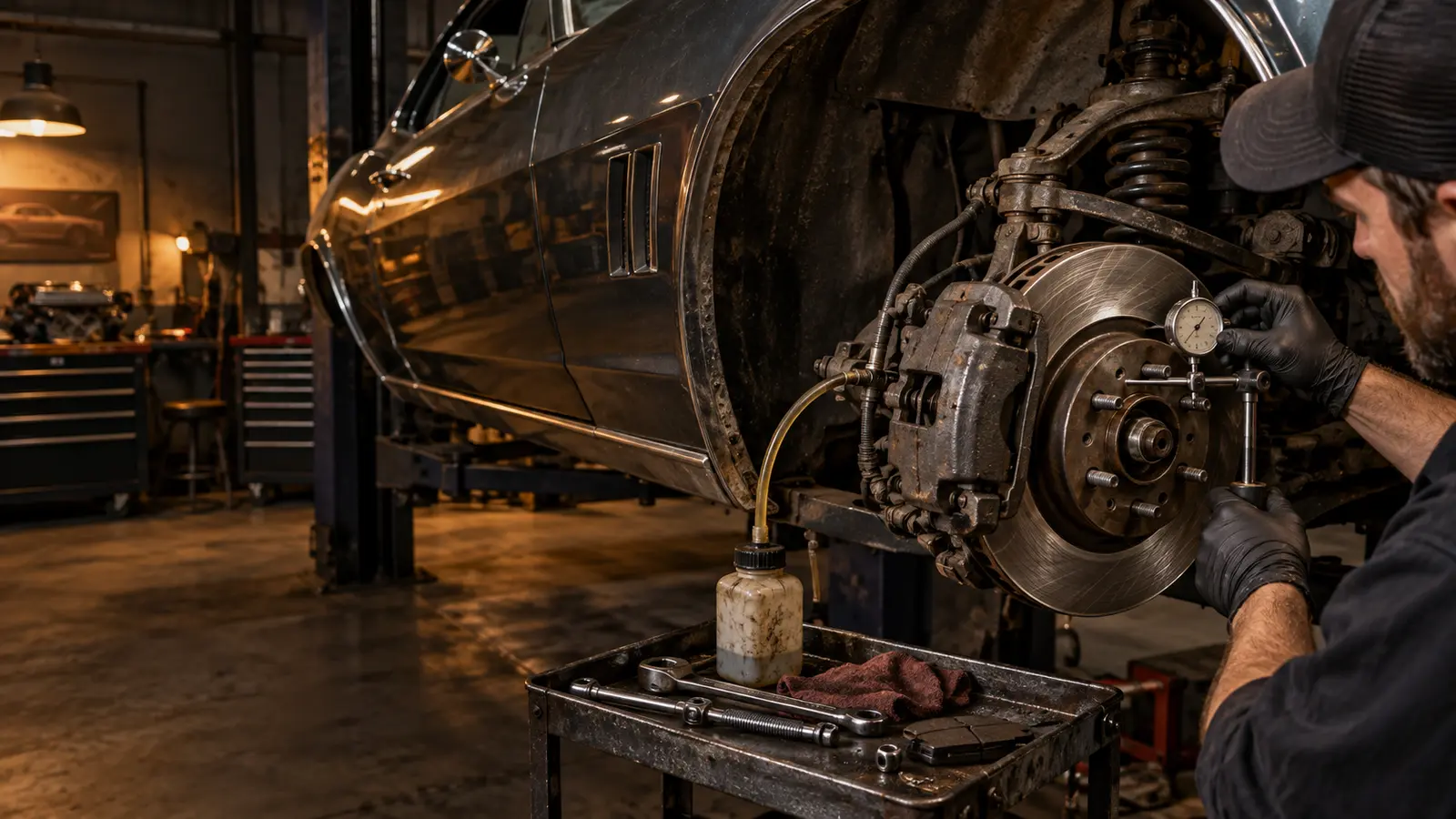
Classic-car brake diagnosis · Fredericksburg region
Find the fault, protect the balance, and repair the entire stopping system—not only the loudest part.
The search that brought you here
For owners searching for classic car brake repair, vintage brake-system diagnosis, drum-brake service, disc-brake troubleshooting, or help with a soft pedal, pull, leak, noise, or vibration near Fredericksburg, Stafford, Spotsylvania, and King George.
A low pedal may involve air, adjustment, geometry, flex, leakage, or master-cylinder travel. A pull may begin with tires, suspension, friction material, a restricted hose, or unequal hardware. Vibration can come from hub or rotor runout, bearing condition, wheel mounting, or another rotating part. Ironwake evaluates the pedal, hydraulics, friction assemblies, wheel ends, tires, suspension, and any prior conversion as one connected system before defining repair work. If the pedal sinks, braking changes suddenly, fluid is leaking, or the vehicle cannot stop predictably, do not continue driving it; arrange safe transport for inspection.
Tell us about the vehicle, truck, or boat →Document the symptom by speed, temperature, pedal feel, direction, and recent work, then measure the system instead of ordering the first part associated with the complaint.
Review front and rear friction, hydraulic pressure, pedal geometry, tires, suspension, and vehicle use together so one repair does not create another imbalance.
Identify components, line routing, adjustment points, wear limits, and future maintenance needs so the finished brake system can be inspected and serviced responsibly.
What the project may include
The exact repair depends on the vehicle, original or converted system, component identification, current condition, wheel and tire package, parts support, previous work, and inspection findings. A project review may include the following connected areas without assuming that every vehicle needs every item.
A deliberate service sequence
Brake work should move from evidence to measurements, from measurements to an approved scope, and from assembly to controlled validation. The sequence changes with the vehicle, but each stage protects the next one.
Start with what the car actually does: pedal height and firmness; whether pumping changes it; pull direction; noise; vibration; drag; warning lights; visible fluid; parking-brake behavior; and whether the symptom changes cold, hot, in reverse, during light stops, or under repeated use. Document recent brake, wheel, tire, suspension, axle, or drivetrain work. A problem that began immediately after a hose replacement, disc conversion, wheel change, or storage period deserves a different diagnostic path than gradual wear. Bring prior invoices, installation instructions, part numbers, fluid history, and photos. Do not road-test a vehicle with a sinking pedal, active leak, severe pull, grinding, locked wheel, or unpredictable stopping simply to gather more evidence.
Classic vehicles may retain stock drums, use later factory parts, combine aftermarket conversion pieces, or contain undocumented repairs from several decades. Verify the year, model, weight, axle, wheels, tires, spindles, hubs, master-cylinder bore, booster, pedal location, calipers or wheel cylinders, rotor or drum dimensions, valves, hose and line routing, and parking-brake hardware. Casting numbers and kit documentation are more useful than assumptions based on appearance. Check the VIN and component information for applicable recalls or safety notices, while recognizing that many modified or older combinations need identification beyond a VIN lookup. The installed system—not a generic catalog listing—sets the starting point.
Remove the wheels and compare left to right as well as front to rear. Inspect friction thickness and contamination, rotor or drum condition, heat evidence, hardware, caliper slides and mounts, wheel-cylinder boots, backing plates, fasteners, bearing play, hub seating, seals, hose clearance, tire condition, wheel fit, and signs of contact through steering and suspension travel. Measure rather than judging wear only by sight. Tire pressure, tire construction, loose bearings, suspension damage, alignment, wheel mounting, and axle movement can imitate or amplify brake faults. Temperature comparisons after a safe controlled test can help identify drag or unequal work, but temperature alone does not establish the cause.
Inspect the reservoir, fluid condition, master cylinder, fittings, steel lines, flexible hoses, junctions, proportioning or combination valves, residual valves when used, calipers, and wheel cylinders for leakage, damage, corrosion, restriction, routing problems, and incorrect connections. Verify pedal free play, pushrod relationship, compensation, and whether pressure releases after the pedal returns. A hose may look acceptable outside yet restrict flow internally; a master cylinder can bypass internally without an obvious external leak; and repeated bleeding cannot correct excessive shoe clearance or the wrong component geometry. Brake fluid absorbs moisture and is harmful to finishes, so testing and disposal must follow the component manufacturer's procedures and safe shop practice.
Pedal ratio, master-cylinder bore, booster assistance, pushrod travel, caliper piston area, wheel-cylinder size, drum adjustment, rotor effective radius, pad or shoe compound, tire grip, and vehicle weight distribution all influence pedal effort and brake balance. Measure hub and rotor runout correctly, confirm bearing adjustment, inspect bracket alignment, and check that bleeders are positioned so trapped air can leave the system. A proportioning valve is not a cure for air, leakage, excessive pedal travel, or a left-to-right pull. Converted cars need special attention because individually compatible parts can still create excessive volume demand, weak mechanical leverage, poor clearance, premature rear lockup, or an unbalanced pedal when combined.
Once the system is identified and measured, separate required repairs from optional upgrades. A repair may retain an original drum or disc layout, replace failed hydraulic or friction components, correct a previous installation, renew aged hoses and lines, restore parking-brake operation, or require a coordinated system change when critical parts are unsupported or mismatched. Customer-supplied parts can be evaluated, but packaging, material, specifications, documentation, condition, and compatibility must be confirmed before use. Federal brake-hose requirements and the component manufacturer's instructions matter when selecting flexible hoses and assemblies. Ironwake does not assume that a performance conversion is the right answer for every stock cruiser or that stock appearance should be preserved at the expense of a known safety problem.
Approved work should follow the exact torque, fluid, adjustment, clearance, bleeding, and bedding instructions for the installed components. After static checks, verify a firm and repeatable pedal, no leaks, correct fluid level, free wheel rotation, hose clearance through steering and suspension travel, parking-brake function, fastener security, wheel torque, and consistent left-to-right operation. Controlled low-speed stops come before road-speed validation. Recheck temperatures, pull, pedal reserve, vibration, noise, and any bedding requirements without moving directly to hard repeated stops. Some new friction materials require a manufacturer-specific burnishing sequence and cool-down. Document the installed parts and service notes so future maintenance does not begin from guesswork again.
Local, appointment-based project work
Ironwake Customs evaluates classic-car and classic-truck brake problems for owners from Fredericksburg, Stafford, Spotsylvania, King George, Dahlgren, Colonial Beach, the Northern Neck, and nearby Southern Maryland by appointment. For an initial project review, send the year, make and model; whether the system is stock or converted; pedal, pull, noise, vibration, leak, or drag symptoms; when they occur; recent brake, wheel, tire, suspension, or axle work; clear photos; part numbers or kit instructions; fluid history; and any parts already purchased. A physical inspection and measurements may still be required before repair scope, parts, or an estimate can be established.
Check project fit ↗Useful planning references
These public, manufacturer, and industry resources add useful context for identification, system support, safety, and compliance. The exact vehicle and approved project scope still control the repair plan.
The federal VIN, vehicle, tire, and equipment lookup helps owners check for documented safety recalls before assuming an older or modified brake problem is unrelated to a known campaign.
Open source ↗Electronic Code of Federal RegulationsThe current federal standard defines labeling and performance requirements for motor-vehicle brake hoses, hose assemblies, and end fittings; it is useful context when evaluating replacement flexible lines.
Open source ↗Wilwood EngineeringManufacturer technical guidance covering pedal ratio, bleeding, caliper orientation, pad bedding, rotor runout, fluid, and other measurements relevant to repair and conversion diagnosis.
Open source ↗Questions owners ask before starting
Possible causes include air, leakage, internal master-cylinder bypass, excessive drum-shoe clearance, caliper or bracket movement, rotor runout or bearing play that pushes pistons back, flexible hoses or lines, incorrect pedal or pushrod geometry, and mismatched conversion components. Pumping behavior and measurements help narrow the cause; repeated bleeding alone is not a complete diagnosis.
A pull can involve unequal tire pressure or grip, alignment or suspension faults, contaminated friction material, a restricted hose, seized hardware, unequal rotor or drum condition, air in one circuit, bearing movement, or different pressure reaching the two sides. Compare both sides systematically before replacing a caliper or adjusting front-to-rear bias.
Ironwake can evaluate original drum systems, original disc systems, and existing conversions for diagnosis and appropriate project scope. Serviceability depends on component identification, condition, specifications, parts support, required tooling, previous modifications, and the approved work. No universal repair or parts-availability claim is made.
No. A proportioning valve changes pressure behavior in the circuit where it is installed to help manage front-to-rear balance. It does not remove air, repair leaks, correct shoe adjustment, change master-cylinder volume, fix pedal geometry, or resolve a left-to-right pull.
The answer depends on vehicle use, originality goals, condition, weight, tires, wheels, axle and spindle configuration, pedal effort, traffic and terrain, parts support, and the performance expected from the full vehicle. A sound original system may fit a near-stock cruiser; another car may benefit from a coordinated upgrade. Inspection should lead the choice.
No. A sinking pedal, active fluid leak, sudden loss of pedal height, severe pull, locked wheel, grinding, or unpredictable stopping can indicate a serious brake-system fault. Stop driving the vehicle and arrange safe transport for inspection rather than testing it on public roads.
Send the year, make and model; stock or converted system details; symptoms by speed, temperature, pedal feel, and direction; recent work; wheel and tire sizes; component or kit numbers; installation instructions; fluid history; clear photos of the pedal, master cylinder, plumbing, and wheel-end assemblies; and parts already purchased. A physical inspection may still be necessary before pricing.
The project needs a real starting point
Ironwake will review the vehicle, current condition, intended use, and requested scope before recommending the right next step.
Start the conversation ↗