Prove the signal path
Separate the measured system, sender or sensor, mechanical drive or electronic signal, harness, grounds, power, lighting, and instrument before replacing the visible gauge.
 IRONWAKECUSTOMS(202) 600-6906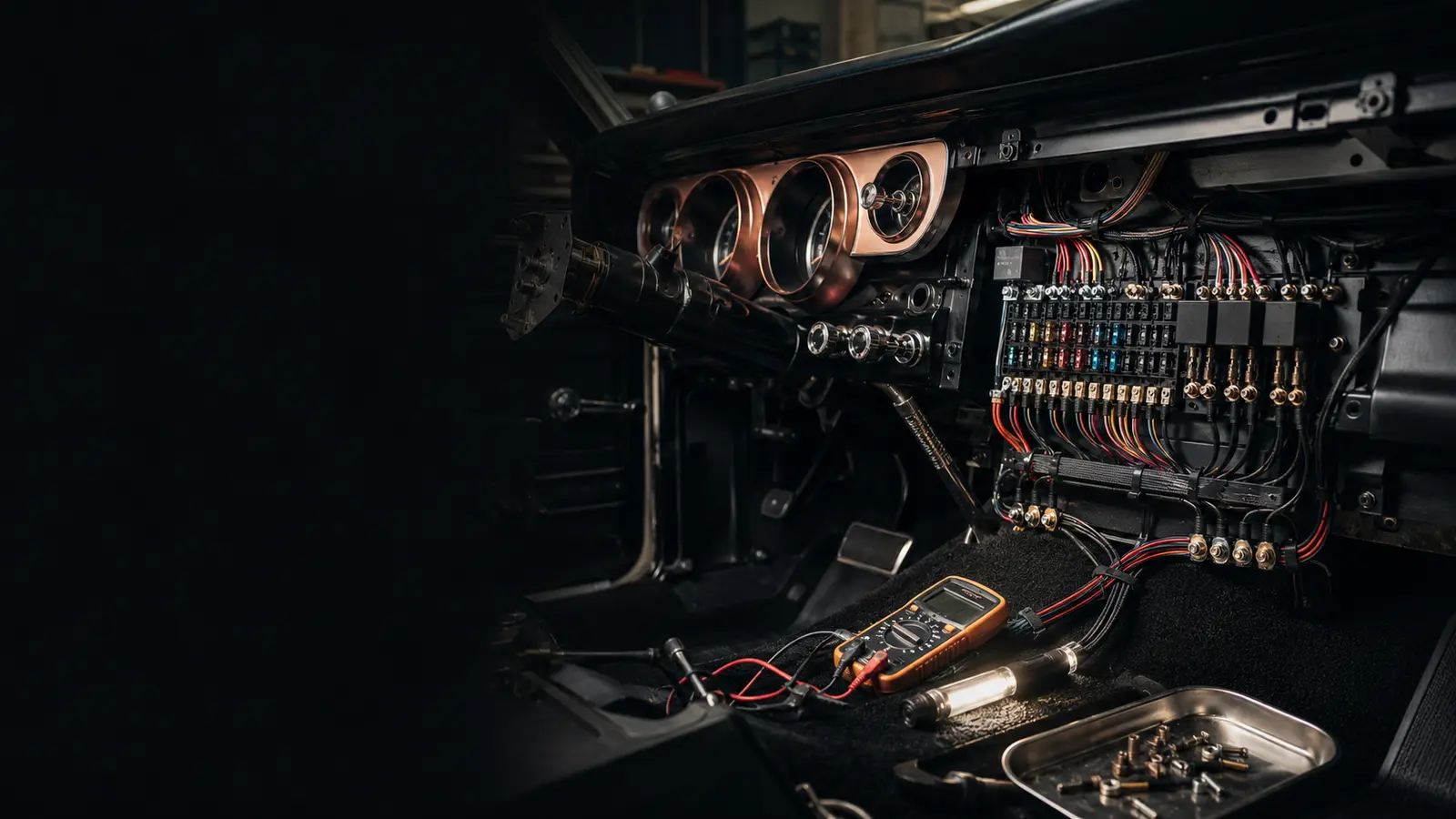
Classic-car gauges · Fredericksburg region
Turn an uncertain needle, dark cluster, or mismatched sender into a measured repair plan.
The search that brought you here
For owners searching for classic car gauge repair, vintage instrument-cluster diagnosis, fuel-gauge repair, speedometer repair, tachometer wiring, or dashboard gauge help near Fredericksburg and King George.
A fuel gauge stuck on full, a temperature needle that climbs with the headlights, an oil-pressure reading that disagrees with a mechanical test, or a speedometer that changes after a transmission swap does not identify its own failed part. Ironwake documents the instrument family, sender or signal source, wiring, grounds, charging voltage, drivetrain changes, cluster condition, and symptom pattern before defining whether the project needs circuit repair, compatible components, calibration, integration, or specialist instrument service.
Tell us about the vehicle, truck, or boat →Separate the measured system, sender or sensor, mechanical drive or electronic signal, harness, grounds, power, lighting, and instrument before replacing the visible gauge.
Identify resistance curves, pulse counts, pressure and temperature sender ranges, voltage requirements, transmission outputs, tire size, rear gearing, and manufacturer instructions before combining parts.
Plan readable daytime and nighttime displays, retained warning lamps, service access, labeling, circuit protection, and documented odometer decisions around the finished classic.
What the project may include
Project fit depends on the vehicle, cluster and gauge type, available diagrams, sender and sensor support, mechanical or electronic speed signal, wiring condition, prior modifications, powertrain changes, access, parts already purchased, and whether a specialist must rebuild an internal instrument mechanism.
A deliberate service sequence
The sequence protects original parts, avoids sender-and-gauge mismatch, and keeps a dashboard problem connected to the system that produces the reading.
Record the year, make, model, engine, transmission, axle ratio, tire size, cluster or gauge brand, part numbers, wiring history, recent changes, and exactly when each reading becomes incorrect. Photos of the cluster face, rear connections, senders, transmission output, fuse panel, and grounds give the review a useful starting point.
Determine whether the gauges are original, reproduction, universal, digital, mechanical, electrical, or mixed. Match fuel-sender resistance, temperature and pressure sender ranges, tachometer input, speed-signal type, indicator lamps, and supply-voltage requirements to the actual components rather than the dashboard appearance.
Verify the underlying fuel quantity, coolant temperature, oil pressure, charging behavior, engine speed, or vehicle-speed source using an appropriate independent method. A gauge cannot be trusted when wrong, but it should not be blamed for a real low-pressure, overheating, charging, fuel-level, or drivetrain problem.
Inspect fuses, cluster feeds, dimmer circuits, connector tension, bulb sockets, printed circuits where fitted, dedicated grounds, sender leads, shielding, signal adapters, and voltage drop under the condition that creates the fault. Avoid grounding sender wires or applying battery voltage unless the exact instrument procedure calls for it.
A proven wiring or connection fault may stay in-house; a mismatched gauge and sender may need compatible components; a damaged mechanical speedometer, odometer, movement, face, or rare original cluster may require a specialist. The estimate should state that boundary instead of implying every instrument can be rebuilt on site.
Route and support wiring away from sharp edges, pedals, steering, heat, and moving parts; protect circuits; label non-original connections; retain required warning functions; control nighttime brightness; and leave enough access to test or remove the cluster without damaging the dash.
Compare readings from cold start through warm operation and controlled road use, check lighting in day and night conditions, verify warning-lamp behavior, inspect for heat or unstable voltage, and document calibration limits. Fuel-level and speed readings should be checked across more than one point when the approved procedure allows.
Local, appointment-based project work
Ironwake evaluates instrument and dashboard projects from King George County for classic-car and classic-truck owners across Fredericksburg, Stafford, Spotsylvania, Dahlgren, Colonial Beach, the Northern Neck, and nearby Southern Maryland. Send the vehicle details, gauge and sender brands or part numbers, powertrain and tire changes, clear photos, wiring diagrams if available, known-good comparison readings, parts already purchased, and the exact behavior of every affected instrument.
Check project fit ↗Useful planning references
These public, manufacturer, and industry resources add useful context for identification, system support, safety, and compliance. The exact vehicle and approved project scope still control the repair plan.
The federal standard explains the safety purpose of accessible, visible, recognizable, identified, and illuminated controls, telltales, and indicators. The exact vehicle model year and applicable requirements still need to be established.
Open source ↗National Highway Traffic Safety AdministrationNHTSA provides VIN, year-make-model, equipment, complaint, investigation, and manufacturer-communication searches that can add useful history before modifying an original or previously repaired dashboard system.
Open source ↗Electronic Code of Federal RegulationsThe federal rule lists mileage-disclosure exemptions by vehicle age and model year. It is a planning reference, not legal advice; ownership records and applicable state requirements should be checked before odometer replacement or alteration.
Open source ↗Questions owners ask before starting
Shared instrument power, a cluster ground, connector, printed circuit, fuse, dimmer, voltage regulator, charging-voltage problem, or prior harness modification can affect multiple gauges. Test the common paths before treating every instrument as a separate failure.
The sender may be open, shorted, poorly grounded, mechanically stuck, incompatible with the gauge, or unable to travel through the tank. The signal wire, gauge power, cluster ground, instrument, and charging voltage also need to be checked with a fuel-safe procedure.
Only when the sender range, direction, thread or mounting, travel, grounding method, and electrical design match the instrument. A functional gauge and functional sender can still read incorrectly when their specifications differ.
Ironwake can evaluate the cable or electronic signal, gearing, wiring, power, grounds, installation, and integration. Internal mechanical, cosmetic, calibration, or odometer work may require a qualified instrument specialist, and any mileage-record obligations should be addressed before replacement or alteration.
Mechanical drive gears, electronic pulse count, converter or controller settings, transmission output, rear-axle ratio, tire rolling circumference, cable condition, and the speedometer itself can change the reading. The complete combination must be identified before correction.
Not automatically. The engine-control harness manages engine and controller functions, while original or replacement gauges may need compatible senders, tach and speed interfaces, warning-lamp circuits, charging integration, stable power, and separate body wiring.
Cost depends on access, diagnosis time, cluster type, number of affected circuits, wiring condition, compatible senders or interfaces, calibration needs, dash modifications, parts support, and specialist services. Ironwake reviews the installed system before defining an estimate.
The project needs a real starting point
Ironwake will review the vehicle, current condition, intended use, and requested scope before recommending the right next step.
Start the conversation ↗