How much does classic-car fuel-system repair cost?+
A responsible estimate depends on the exact leak or delivery fault, tank and line condition, access, fuel-system design, parts support, prior modifications, contamination, electrical work, and whether the concern can be reproduced safely. Photos and component information can begin the review, but active-leak and intermittent-delivery problems normally need inspection and testing before a scope is defined.
Can I drive a classic car that smells like gasoline?+
Do not assume a gasoline odor is normal. Visible fuel, dripping, wet components, strong cabin or trunk fumes, leakage near exhaust or electrical equipment, or a sudden persistent odor is a stop-driving condition. Shut the vehicle down when safe, move people away from fumes and ignition sources, and arrange appropriate transport for diagnosis.
Can a rusty or leaking classic-car fuel tank be repaired?+
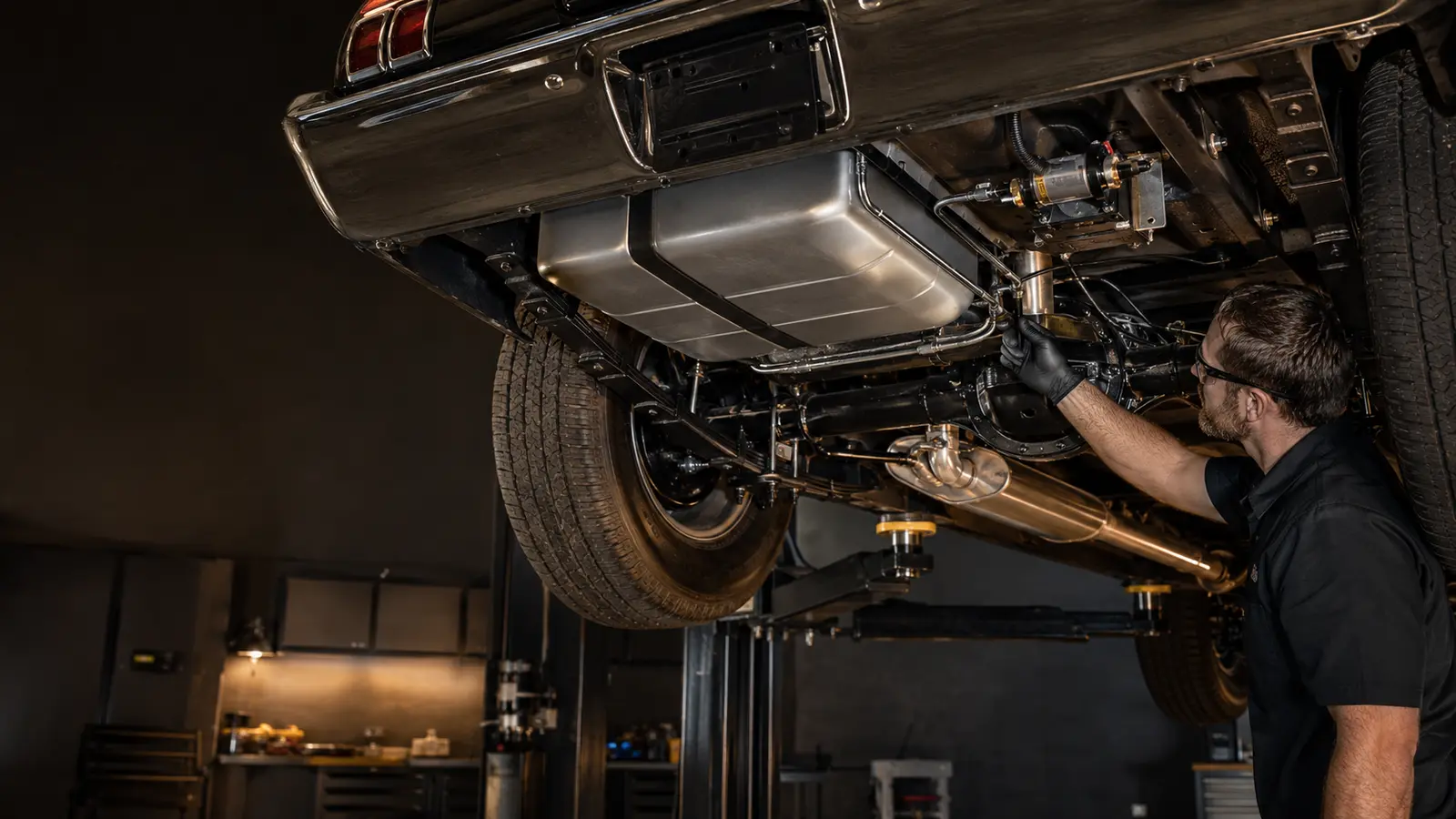
Sometimes replacement or specialist restoration is more appropriate. Material, internal and external corrosion, seam condition, leak location, contamination, coatings, baffles, sender and vent provisions, mounting, replacement support, and the rest of the vehicle determine the responsible path. No tank-repair promise is made without inspection.
How do you tell whether a fuel pump or a restriction is causing the problem?+
Pressure, delivery volume, restriction or inlet vacuum, vent behavior, filter condition, fuel level, temperature, and electrical performance under the failing condition help separate a weak pump from a blocked pickup, crushed line, dirty filter, collapsed hose, tank-vent fault, heat problem, or voltage drop.
Is a carburetor problem part of fuel-system repair?+
The carburetor is the receiving end of a carbureted fuel system, so inlet leakage, excessive pressure, bowl level, flooding, heat soak, and supply stability are evaluated together. Internal carburetor wear, cleaning, rebuilding, calibration, and linkage work may become a separate carburetor-repair or tuning scope after the surrounding fuel supply is proven.
Can Ironwake install fuel-system parts I already bought?+
Customer-supplied tanks, pumps, filters, regulators, hose, fittings, senders, and wiring components can be evaluated, but compatibility and condition are not assumed. Part numbers, pressure and flow range, fuel compatibility, hose rating, electrical demand, mounting, venting, return strategy, and documentation must fit the installed vehicle and intended use.
What is the difference between fuel-system repair and a fuel-system upgrade?+
Repair targets a documented leak, restriction, failed component, wiring fault, pressure-control problem, or unsafe routing in an otherwise suitable system. An upgrade changes the design for EFI, higher demand, a return circuit, a new tank or sender, electric-pump conversion, different fuel, improved serviceability, or a broader restomod plan. Ironwake defines them as separate scopes when the evidence supports both.