Map the symptom first
Record speed, gear, temperature, acceleration, cruise, coast, turning, braking, and recent work so the inspection starts with repeatable evidence instead of a parts guess.
 IRONWAKECUSTOMS(202) 600-6906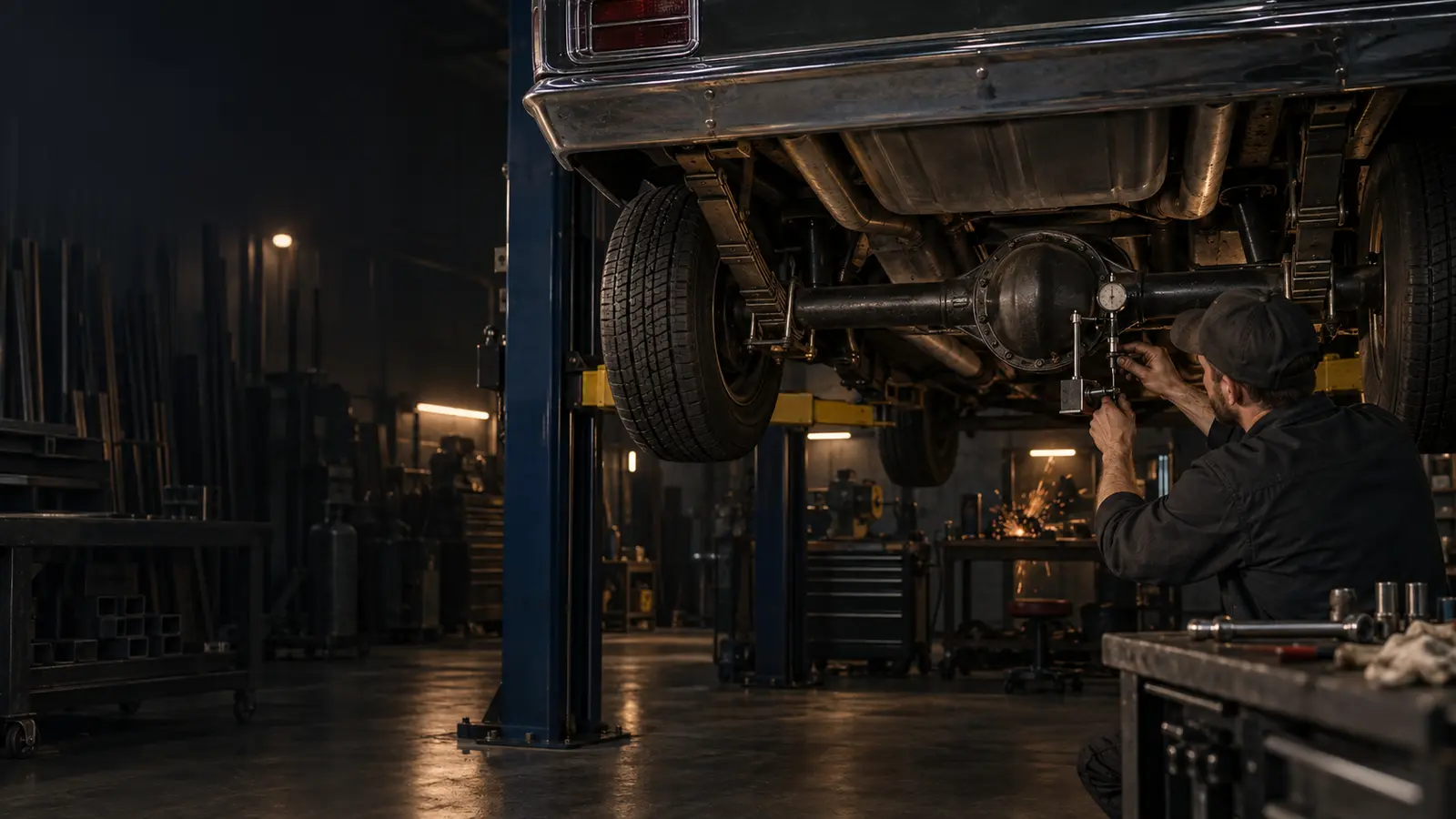
Classic-car differential repair · Fredericksburg region
Measure the noise, wear, and geometry before choosing gears or parts.
The search that brought you here
For owners searching for classic car differential repair, rear-end repair, ring-and-pinion diagnosis, axle bearing service, or differential help near Fredericksburg, Stafford, Spotsylvania, and King George.
Whine under load, howl on coast, a clunk during direction changes, chatter in turns, a leaking pinion seal, metal in the lubricant, or vibration at road speed can come from different places. Ring-and-pinion contact, backlash, bearing condition, axle shafts, wheel bearings, differential type, lubricant, driveshaft joints, operating angles, mounts, tires, and previous setup work all deserve attention before teardown. Ironwake evaluates the axle as part of the complete classic-car driveline and defines repair, upgrade, fabrication, or specialist needs only after the evidence supports a path.
Tell us about the vehicle, truck, or boat →Record speed, gear, temperature, acceleration, cruise, coast, turning, braking, and recent work so the inspection starts with repeatable evidence instead of a parts guess.
Separate differential concerns from tires, wheel bearings, brakes, universal joints, driveshaft runout, pinion angle, transmission play, suspension mounts, and chassis contact.
Identify the housing, ratio, carrier, axle design, brakes, yokes, lubricant requirements, parts support, and intended use before selecting a repair or change.
What the project may include
Final scope depends on the axle family, condition, service information, parts support, previous modifications, vehicle weight and use, transmission and tire combination, noise pattern, measurements, and whether specialized machining or setup operations are required. Ironwake does not make a universal rebuild claim for every differential model.
A deliberate service sequence
The sequence protects useful evidence and helps distinguish a focused service from a larger axle, driveline, or chassis problem. Procedures and limits must come from the exact housing, differential, gear set, and component manufacturers—not a universal setting copied from another axle.
Describe the sound or behavior without diagnosing it: steady whine, cyclic howl, rumble, clunk, chatter, bind, leak, heat, or vibration. Record road speed, engine rpm, transmission gear, acceleration versus coast, turning direction, temperature, load, and whether the symptom began after gear, bearing, seal, suspension, driveshaft, wheel, tire, or ride-height work. Stop driving if the axle binds, becomes unusually hot, loses lubricant onto a tire or brake, develops severe vibration, or sheds visible metal.
Document the housing type, casting and identification marks, axle-retention design, gear ratio, carrier or differential type, yoke or flange, brakes, wheel bolt pattern, housing width, lubricant specification, vent arrangement, previous setup records, and any swapped components. A classic may no longer contain the rear axle listed in its original service literature, and visually similar parts can use different bearings, offsets, spline counts, carriers, or setup methods.
Inspect tires for pressure, construction, wear, damage, and runout; check wheel and axle bearings, brake drag, loose hardware, exhaust or body contact, spring pads, control-arm bushings, universal joints, slip splines, transmission-output play, driveshaft runout and phasing, and operating angles at installed ride height. A noise transmitted through a floor or frame may sound centered in the differential even when the source is beside or ahead of it.
Verify level and condition with the applicable procedure, then document odor, color, water, debris, metallic material, and evidence of incompatible lubricant or additive. Inspect the cover or carrier, pinion and axle seals, vent, yoke, flange, housing, tubes, welds, mounts, and brake interfaces. A new seal may not last if yoke wear, bearing movement, runout, pressure from a blocked vent, housing damage, or an incorrect installation remains unresolved.
When teardown and measurement are supported, backlash, pinion depth, pinion-bearing preload, differential-bearing preload, ring-gear runout, carrier fit, tooth contact, bearing and race condition, axle endplay, and housing alignment must be considered together. Dana Spicer's axle-rebuild guidance treats preload, backlash, and gear-pattern adjustments as related steps. Tightening a pinion nut to remove play, reusing a one-time crush sleeve, or interpreting a pattern without the required setup load can erase evidence and damage parts.
A defensible scope may involve a leak or bearing repair, a matched ring-and-pinion and installation kit, carrier or differential service, axle-shaft or wheel-bearing work, housing correction, a complete axle change, or coordination with a specialist for unsupported machining and setup. Ratio and traction-device decisions must account for transmission ratios, tire diameter, cruising rpm, engine torque, vehicle weight, street manners, intended traction, brake compatibility, parts availability, and future build phases.
After approved work, verify lubricant and additive requirements, seals, venting, fasteners, brakes, axle and wheel rotation, driveshaft clearance, measured geometry, and documentation before road use. New gears and some components can require manufacturer-specific break-in, heat cycles, load restrictions, and an early lubricant change. Validation should progress from stationary checks to low-speed operation and then controlled road testing under the conditions that originally exposed the complaint—not immediate hard acceleration.
Local, appointment-based project work
Ironwake Customs evaluates classic-car and classic-truck differential and rear-axle projects for owners from Fredericksburg, Stafford, Spotsylvania, King George, Dahlgren, Colonial Beach, the Northern Neck, and nearby Southern Maryland by appointment. For an initial project review, send the year, make and model; axle identification and ratio; transmission; tire size; differential type; clear photos; a speed-and-load symptom description; leak or lubricant observations; recent driveline, suspension, wheel, tire, or gear work; parts already purchased; and any previous setup measurements. Inspection may still be required before a repair scope or estimate can be established.
Check project fit ↗Useful planning references
These public, manufacturer, and industry resources add useful context for identification, system support, safety, and compliance. The exact vehicle and approved project scope still control the repair plan.
Manufacturer guidance showing why bearing preload, backlash measurement, and gear-pattern adjustment must be handled as connected setup decisions.
Open source ↗EatonA manufacturer application resource for identifying supported open, limited-slip, locking, and selectable differential options before ordering a carrier by assumption.
Open source ↗Yukon Gear & AxleManufacturer guidance on controlled heat cycles, load limits, lubricant, and the post-installation checks that protect a newly installed gear set.
Open source ↗Questions owners ask before starting
Whine, howl, rumble, clunk, chatter, leakage, excessive heat, metal in lubricant, or measurable play can justify inspection, but none proves one specific internal failure. Tires, wheel bearings, brakes, driveshaft joints, transmission play, mounts, suspension, ride height, and operating angles can produce similar symptoms. Diagnose the full driveline before authorizing parts.
A load-specific whine can involve drive-side ring-and-pinion contact, backlash, pinion depth, bearing preload, worn bearings, lubricant, housing alignment, or another component loaded by engine torque. The exact speed, load, temperature, recent work, measurements, and tooth pattern are needed before deciding whether gears or bearings are responsible.
No universal rebuild claim is made. Ironwake can identify and evaluate the axle, diagnose connected-system concerns, and define repair, upgrade, fabrication, parts, setup, or specialist needs. Serviceability depends on the exact housing and differential, condition, documentation, parts support, required tooling and machining, and approved project scope.
Sometimes, but the leak's cause matters. Yoke wear, bearing movement, runout, incorrect venting, housing pressure, a damaged surface, prior pinion-nut work, or incorrect preload can make a seal-only repair incomplete. The axle's preload method and manufacturer procedure must be understood before disturbing the yoke or pinion nut.
That depends on originality goals, housing condition, ratio, differential type, parts support, power, vehicle weight, tire traction, transmission, brakes, suspension, intended use, and future plans. An original axle may suit a near-stock cruiser; a major powertrain or tire change may support a complete-system upgrade. Measurement should lead the decision.
Many gear manufacturers specify staged driving, cool-down periods, load limits, lubricant requirements, and an early fluid change. Follow the instructions supplied for the exact gear set and differential. Do not substitute a generic mileage schedule when the selected manufacturer provides different requirements.
Send the vehicle year, make and model; rear-axle identification; ratio and differential type when known; transmission and tire size; symptoms by speed, load, turn direction, and temperature; leak and lubricant details; recent work; parts already purchased; clear underside photos; and any backlash, pattern, preload, runout, or driveshaft-angle records. A physical inspection may still be needed before pricing.
The project needs a real starting point
Ironwake will review the vehicle, current condition, intended use, and requested scope before recommending the right next step.
Start the conversation ↗