Verify the heat
Compare the gauge, sender, wiring, grounds, thermostat housing, radiator, and engine temperatures so the repair is based on a real operating condition rather than an unverified dashboard reading.
 IRONWAKECUSTOMS(202) 600-6906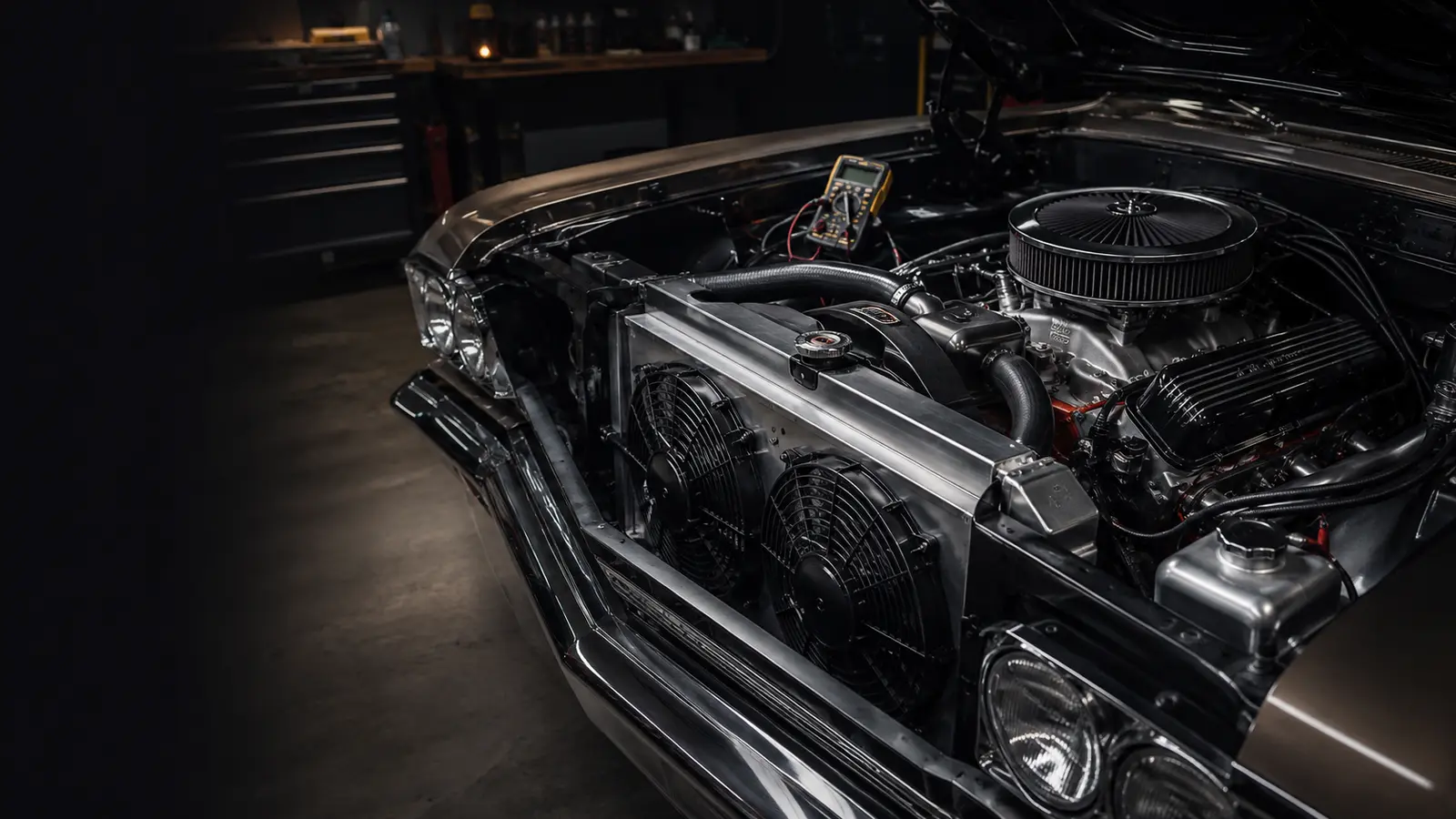
Classic-car cooling diagnosis · Fredericksburg region
Find the leak, flow loss, airflow fault, or false reading before the next overheat.
The search that brought you here
For owners searching for classic car cooling system repair, vintage-car overheating diagnosis, radiator leak repair, water-pump or thermostat testing, cooling-fan repair, or coolant-loss diagnosis near Fredericksburg, King George, Stafford, and Spotsylvania.
Classic cooling systems combine radiators, tanks, caps, recovery or overflow plumbing, pumps, pulleys, belts, thermostats, bypass passages, hoses, heater circuits, mechanical or electric fans, shrouds, temperature senders, gauges, relays, grounds, engine tune, and decades of prior repairs. A symptom at one component does not prove that component caused it: a weak cap can push coolant out, trapped air can imitate a thermostat fault, low fan voltage can look like an undersized radiator, and combustion leakage can overwhelm a system made entirely of new parts. Ironwake documents the operating pattern, verifies the temperature, and tests the installed system before defining a focused repair. Steam, rapid temperature rise, repeated coolant expulsion, loss of cabin heat during an overheat, detonation, or coolant entering the oil is a stop-driving concern; shut the engine down safely and arrange transport rather than continuing to test it on the road.
Tell us about the vehicle, truck, or boat →Compare the gauge, sender, wiring, grounds, thermostat housing, radiator, and engine temperatures so the repair is based on a real operating condition rather than an unverified dashboard reading.
Separate idle, traffic, highway, hill, towing, air-conditioning, hot-shutdown, and coolant-loss behavior because each pattern changes the first airflow, circulation, pressure, engine, and control checks.
Correct the proven leak, restriction, pump, thermostat, fan, wiring, belt, pressure, recovery, or engine-related fault before treating a larger radiator or electric-fan conversion as the default answer.
What the project may include
Project fit depends on the vehicle, engine, cooling-system design, installed components, measured temperature, coolant condition, previous repairs, parts support, engine condition, intended use, and whether the symptom can be reproduced safely. Evaluation does not mean every radiator can be rebuilt, every engine can be saved after overheating, or every customer-supplied component is suitable.
A deliberate service sequence
Cooling diagnosis begins with safety and a repeatable operating pattern, then separates indication, pressure, circulation, airflow, and engine heat. The exact sequence changes with the car, but these checkpoints keep a replacement part from hiding the actual fault.
Record whether the concern is a slow rise, rapid spike, boil-over, steam, visible leak, coolant odor, heater-temperature change, gauge fluctuation, fan failure, belt noise, or coolant loss without a puddle. Note ambient temperature, road speed, engine rpm, traffic, hill or load, air-conditioning use, drive time, shutdown time, coolant added, and recent work. Never remove a hot cap or reach near a moving fan or belt. A car that has expelled coolant, lost oil pressure, detonated, mixed coolant and oil, or repeatedly overheated should arrive by safe transport.
Document the vehicle, engine, cylinder heads, radiator, cap rating, overflow or recovery arrangement, pump, rotation and drive, pulley sizes, thermostat and bypass, hoses, heater circuit, mechanical fan or clutch, electric fans, shroud, relays, fuses, wire size, temperature switches or ECU commands, sender, gauge, coolant type, and prior modifications. Classic vehicles often mix original, universal, swap, and aftermarket parts. Specifications must match what is actually installed and how it is plumbed, not only the year on the title.
Begin with the engine fully cold. Compare coolant level, oil condition, cap and neck, radiator face, tanks and seams, drain, pump weep area, gasket joints, core plugs, hoses, clamps, heater circuit, overflow bottle, belts, pulleys, fan placement, shroud coverage, wiring, grounds, dried residue, stains, corrosion, blocked fins, missing seals, hose contact, and signs of prior sealant. Verify the displayed temperature against appropriate independent measurements before diagnosing around a gauge that may have the wrong sender, poor ground, resistance, or calibration.
Use the correct cold-system and cap-testing procedure without exceeding the component rating. Trace external leakage at the radiator, neck, cap seal, tanks, seams, pump, thermostat housing, intake or head joints, core plugs, heater core, hoses, clamps, drains, and recovery plumbing. Watch whether coolant moves into and returns from the recovery bottle as designed. When the evidence calls for it, evaluate internal loss, combustion gas, exhaust vapor, spark-plug condition, oil contamination, and cylinder-to-cylinder clues instead of assuming an invisible leak is harmless evaporation.
Observe warm-up rate, thermostat behavior, temperature distribution, hose stability, pump drive, bypass function, radiator inlet and outlet behavior, heater output, fan engagement, electric-fan direction, loaded voltage, relay command, fuse condition, ground-path drop, shroud seal, fan position, condenser or cooler stacking, grille opening, and hot-air recirculation. A car that heats at idle often earns different first checks than one that heats at sustained speed or on a grade, but the pattern guides testing rather than proving a diagnosis by itself.
Review ignition timing, fuel mixture, vacuum leaks, exhaust restriction, transmission heat, accessory load, gearing, engine speed, combustion leakage, cylinder condition, head-gasket evidence, and recent engine work when cooling tests do not explain the temperature. A cooling system cannot compensate indefinitely for incorrect combustion, severe mechanical damage, or a mismatched operating combination. Those findings are documented before a repair estimate expands into engine, calibration, exhaust, or driveline work.
Correct the documented fault with compatible parts, routing, mounts, fasteners, seals, clamps, wiring, circuit protection, grounds, pressure rating, coolant, and service access. Fill and bleed by the system's required procedure, then verify cold start, warm-up, thermostat operation, fan control, pressure, recovery, leaks, gauge agreement, idle, controlled road load, shutdown, and hot soak when appropriate. Reinspect after cool-down and document the measurements, installed parts, coolant, remaining condition, and whether a separate capacity or airflow upgrade should be planned.
Local, appointment-based project work
Ironwake Customs is based in King George County and evaluates cooling-system problems on classic cars and classic trucks from Fredericksburg, Stafford, Spotsylvania, Dahlgren, Colonial Beach, the Northern Neck, and genuinely nearby Southern Maryland by appointment. For an initial review, send the vehicle year, make and model; engine and transmission; radiator, cap, pump, thermostat, fans and controls; actual temperature readings; the exact condition that triggers the rise; coolant-loss evidence; recent work; and clear photos of the radiator, fan, shroud, hoses, pulleys, overflow or recovery plumbing, wiring, leaks, stains, and engine bay. Let the system cool completely before photographing any area near a cap, belt, or fan.
Check project fit ↗Useful planning references
These public, manufacturer, and industry resources add useful context for identification, system support, safety, and compliance. The exact vehicle and approved project scope still control the repair plan.
The federal lookup lets owners check VIN, vehicle, and equipment recalls, investigations, complaints, and manufacturer communications before assuming an older cooling fault has no documented safety history.
Open source ↗Gates TechZoneManufacturer technical guidance explains why hoses, thermostat, water pump, radiator cap, circulation, pressure, and temperature control should be inspected as one system rather than replaced independently.
Open source ↗HELLA Tech WorldIndustry diagnostic guidance provides additional context for system inspection, pressure testing, temperature behavior, fan control, coolant condition, leakage, and overheating fault isolation.
Open source ↗Questions owners ask before starting
A responsible estimate depends on whether the concern is a leak, false reading, pressure loss, restricted radiator, pump or thermostat fault, fan or wiring problem, trapped air, contamination, engine condition, or several connected faults. Vehicle information and photos can begin the review, but overheating and intermittent coolant-loss concerns normally need inspection and measured testing before a scope is defined.
Continuing to drive can turn a repairable cooling fault into engine damage. If temperature rises rapidly, steam appears, coolant is expelled, the heater suddenly goes cold, the engine detonates, or oil pressure changes, shut down safely. Never open a hot pressurized system, and arrange appropriate transport rather than repeatedly topping it off and driving farther.
That pattern often directs the first checks toward low-speed airflow, fan direction and speed, clutch operation, shroud coverage, hot-air recirculation, pulley speed, electric-fan voltage, relays, wiring, grounds, and control inputs. It is not proof that the radiator or fan is the only problem, so circulation, pressure, indication, and engine condition still need verification.
Sustained-speed or load-related overheating can involve coolant restriction, lower-hose collapse, thermostat or pump behavior, radiator condition, pressure loss, trapped air, high engine load, gearing, ignition timing, fuel mixture, combustion leakage, or airflow pressure around the vehicle. Measurements under the failing condition are more useful than an idle-only parts check.
Only when radiator condition or capacity is the proven limitation and the rest of the system supports the replacement. Fan performance, shrouding, seals, pump rotation and speed, thermostat and bypass, fill point, pressure, coolant path, gauge accuracy, engine tune, and combustion condition can matter as much as radiator material or advertised row count.
Radiator material, tank and core condition, mounting, leak location, contamination, dimensions, repair support, and the vehicle's finished use determine the path. Ironwake can evaluate the installed system and coordinate an appropriate repair, specialist service, replacement, or upgrade scope, but does not promise that every original radiator can be rebuilt in house.
Repair targets a documented leak, failed cap, hose, pump, thermostat, fan, relay, wire, sender, gauge, pressure, circulation, or recovery fault in an otherwise suitable system. An upgrade changes capacity, airflow, control, packaging, fill or expansion strategy for an engine swap, added air conditioning, higher load, or broader restomod plan. Ironwake defines them as separate scopes when the evidence supports both.
The project needs a real starting point
Ironwake will review the vehicle, current condition, intended use, and requested scope before recommending the right next step.
Start the conversation ↗